Ze Frank
Reference: TED
Ze Frank
Reference: TED

1- to destroy something or someone completely:
Just one of these bombs could annihilate a city the size of New York.
2- to defeat someone easily and completely in a game or competition:
Tyson annihilated his opponent in the first round.
I asked the zebra,
Are you black with white stripes?
Or white with black stripes?
And the zebra asked me,
English, like most other languages, is full of slang, expressions, and informal vocabulary. Perhaps the most common situation in which we see such words or phrases used is in expressing an affirmative or negative response. An affirmative or negative response is just a grammatically technical way to describe a yes or no answer. Just to review, we use yes to affirm a previous idea or express a positive reaction. This would be an affirmative case. We use no to negate a previous idea or express a negative reaction. This would be a negative case.
Continue reading Different Ways To Say Yes And No In EnglishAn intimate look at writing, running, and the incredible way they intersect, from the incomparable, bestselling author Haruki Murakami. While simply training for New York City Marathon would be enough for most people, Haruki Murakami’s decided to write about it as well. The result is a beautiful memoir about his intertwined obsessions with running and writing, full of vivid memories and insights, including the eureka moment when he decided to become a writer. By turns funny and sobering, playful and philosophical, What I Talk About When I Talk About Running is rich and revelatory, both for fans of this masterful yet guardedly private writer and for the exploding population of athletes who find similar satisfaction in athletic pursuit.
Download English Version
Teri Horton, a 60-year-old lady from Lo Angeles, went shopping in San Bernardino, a town in California, USA. She was in a charity shop when she saw a colourful, modern painting. She bought it for $5.
Continue reading Who is Jackson Pollock?The reason we start things is rarely the reason we continue them.
Mr Robinson never went to a dentist, because he was afraid, but then his teeth began hurting a lot, and he went to a dentist.
The dentist did a lot of work in his mouth for a long time. On the last day, Mr Robinson said to him, ‘How much is all this work going to cost?’ The dentist said, ‘Twenty-Five pounds,’ but he did not ask him for the money.
After a month Mr Robinson phoned the dentist and said, ‘You haven’t asked me for any money for your work last month.’
‘Oh,’ the dentist answered, ‘I never ask a gentleman for Money.’
‘Then how do you live?’ Mr Robinson asked.
‘Most gentlemen pay me quickly,’ the dentist said, ‘but some don’t. I wait for my money for two months, and then I say, “That man isn’t a gentleman,” and then I ask him for my money.
Reference: Steps to Understanding
STUIU14
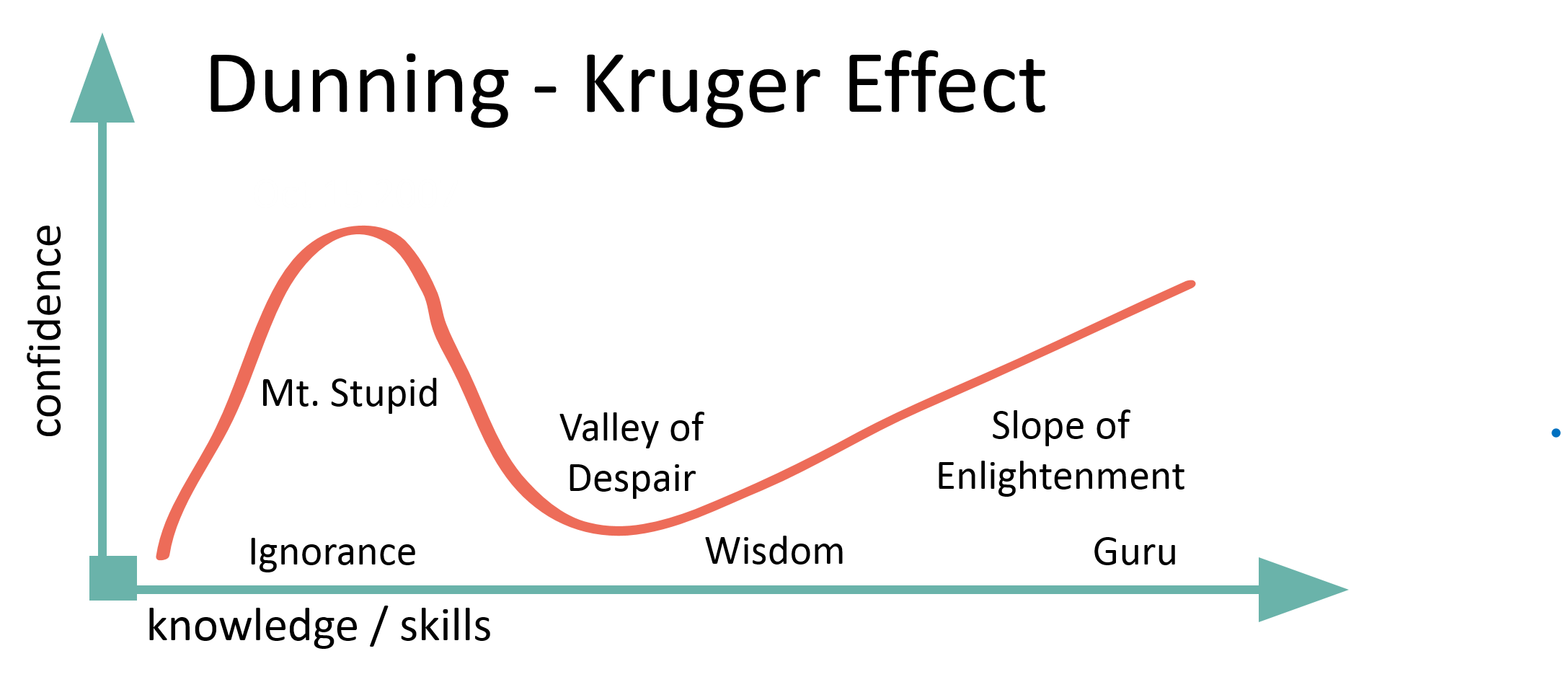
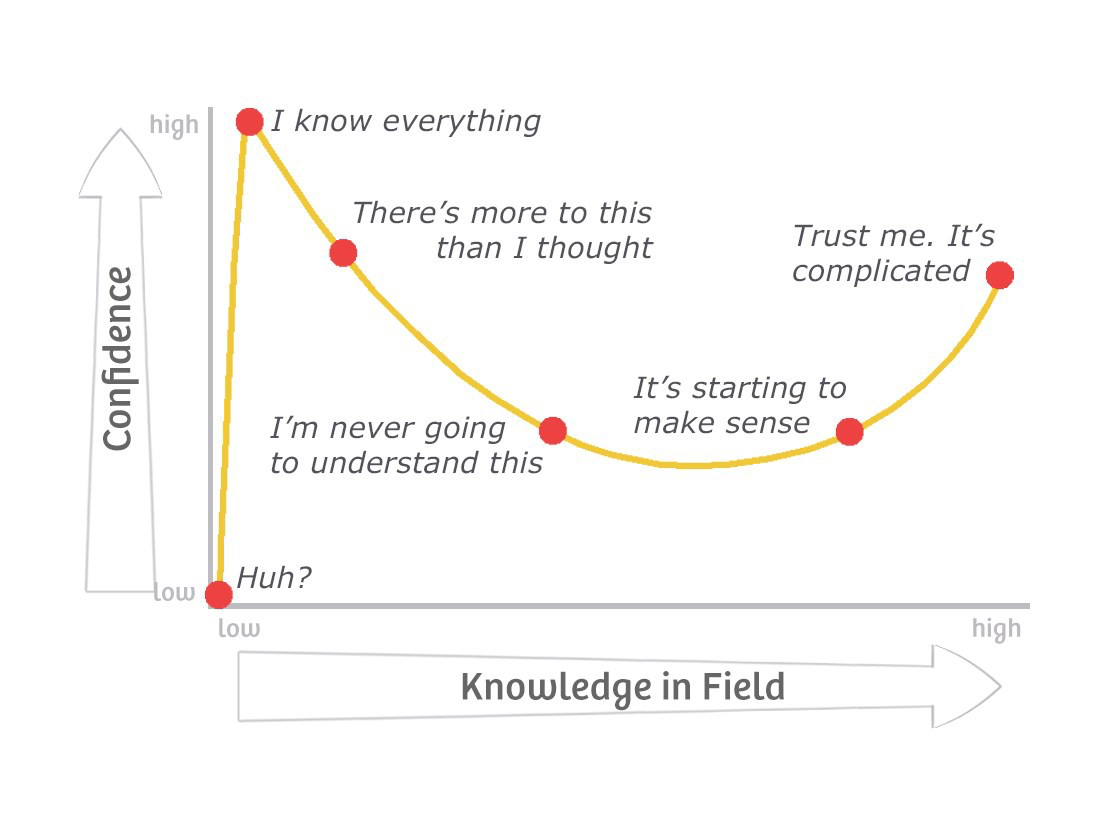
In the field of psychology, the Dunning–Kruger effect is a cognitive bias in which people of low ability have illusory superiority and mistakenly assess their cognitive ability as greater than it is.
Reference: Wikipedia